

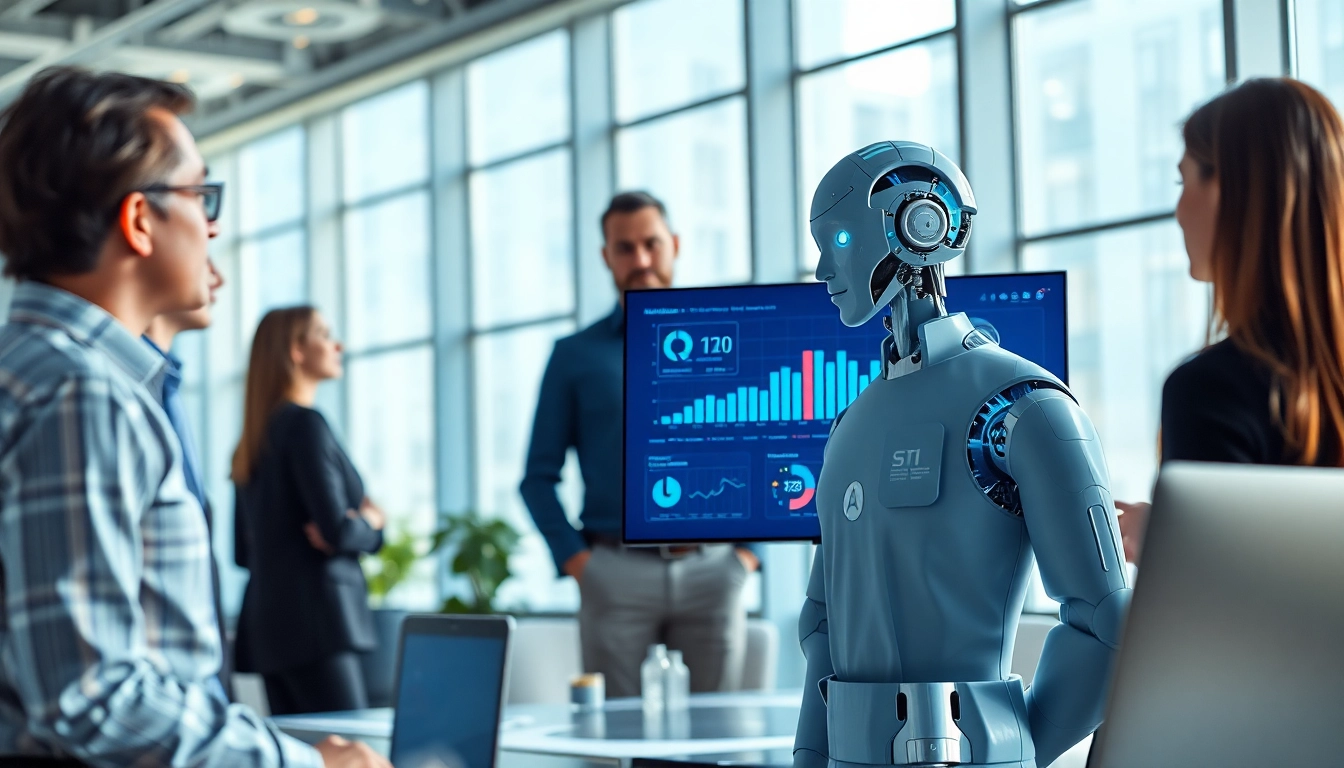
Understanding AI Employee
The concept of AI Employee has emerged as a groundbreaking solution in various sectors. An AI Employee refers to artificial intelligence systems designed to automate tedious tasks, enhance productivity, and improve operational efficiency. These systems leverage machine learning, natural language processing, and data analytics to perform roles traditionally filled by human employees. As businesses continually seek to optimize processes, the integration of AI technology becomes increasingly pivotal.
Definition and Capabilities
AI Employee encompasses a broad range of functionalities, from chatbots that handle customer service inquiries to sophisticated bots capable of complex decision-making. They can process vast amounts of data, learn from interactions, and adapt their functions over time. The capabilities of AI Employees often include:
- Task Automation: Completing repetitive tasks such as scheduling, data entry, and report generation.
- Data Analysis: Interpreting data patterns and providing actionable insights.
- Natural Language Processing: Understanding and responding to human language for effective communication.
- Adaptability: Learning from user interactions to improve performance.
The Role of AI Employee in Different Industries
AI Employees are making significant inroads across numerous industries, transforming the way businesses operate. In healthcare, for instance, AI systems can assist in patient management, analyze medical records, and even diagnose conditions. In finance, they manage transactions and detect fraud through continuous monitoring of patterns. Similarly, sectors like marketing and sales rely on AI for customer segmentation and personalized recommendations. The versatility of AI Employees allows them to seamlessly integrate into diverse workflows.
Advantages of Integrating AI Employee
Integrating AI Employees into a business framework offers a variety of advantages:
- Cost Efficiency: Reducing operational costs by automating routine tasks, allowing human resources to engage in more strategic activities.
- Increased Productivity: AI Employees work around the clock, ensuring tasks are completed without downtime.
- Enhanced Accuracy: Minimizing human errors in data processing or task execution.
- Improved Decision Making: Providing data-driven insights that inform business strategies.
Implementing AI Employee Solutions
Assessing Business Needs for AI Employee
Before implementing AI solutions, organizations must assess their business needs. This involves identifying repetitive, time-consuming tasks that can benefit from automation. Conducting a task audit can help pinpoint areas where AI Employees could add value. Questions executives might consider include:
- Which tasks consume the most time for employees?
- What data-driven decisions are needed frequently?
- Where do errors commonly occur that could be mitigated with automation?
Choosing the Right Tools and Platforms
Selecting the right tools for AI implementation is crucial for success. Organizations must consider factors such as:
- Scalability: The ability to grow with business needs.
- User-Friendliness: How easily staff can adapt to new systems.
- Integration: Compatibility with existing software.
Potentially beneficial platforms might include AI-specific software that offers pre-built functionalities tailored to certain industries or custom solutions requiring development.
Best Practices for Integration
Successful integration of AI Employees into a workforce requires a clearly defined strategy. Best practices include:
- Engage employees in the process to foster acceptance and reduce resistance.
- Provide adequate training to ensure employees can leverage AI tools effectively.
- Monitor and evaluate the AI Employee’s performance against established KPIs to ensure desired outcomes are achieved.
Challenges in Utilizing AI Employee
Common Misconceptions
Despite the numerous benefits AI Employees offer, misconceptions often deter businesses from adoption. A prevalent myth is that AI will completely replace human jobs. In reality, AI is designed to enhance human capabilities, not supplant them. By automating mundane tasks, AI allows employees to focus on more strategic, creative, and human-centric elements of their work.
Addressing Workforce Concerns
Concerns about job security and AI’s role in the workplace are valid. To address these, organizations must communicate the value of AI in augmenting rather than eliminating jobs. Providing clear pathways for reskilling employees in technology-related roles can alleviate fears and improve overall morale. Engaging with employees to understand their concerns and outlining how AI enhances their work can foster a more harmonious integration.
Data Security and Privacy Issues
Implementing AI solutions comes with data security challenges. Organizations must ensure that robust security measures are in place to protect sensitive information processed by AI Employees. This includes encryption, access controls, and compliance with data protection regulations. Regular audits and tests of security systems can help identify vulnerabilities before they become significant threats.
Measuring Success with AI Employee
Key Performance Indicators (KPIs)
To effectively measure the impact of AI Employees, organizations should define relevant KPIs. These can include:
- Time saved on specific tasks post-AI integration.
- Reduction in error rates in data processing.
- Employee productivity metrics comparing performance before and after AI implementation.
Having clear KPIs enables businesses to track success and make adjustments as necessary.
Analyzing ROI from AI Employee Integration
Quantifying the return on investment (ROI) from AI Employee integration involves comparing the costs associated with AI implementation—such as software, training, and ongoing maintenance—against the financial benefits realized from increased efficiency and reduced labor costs. Regular financial assessments can help in understanding the long-term value of AI investments.
Continuous Improvement and Feedback Loops
Continuous improvement is vital for enhancing AI performance. Organizations should establish feedback loops where AI system outputs are regularly evaluated for effectiveness. Employee feedback can provide valuable insights into how AI systems are used and where they can be further improved. This iterative approach ensures that AI Employees evolve alongside business needs.
Future Trends in AI Employee Technology
Advancements on the Horizon
The field of AI is rapidly evolving, with advancements such as increased personalization, integration of AI across more roles, and improved natural language understanding. The future will likely see AI Employees taking on more complex tasks, leading to greater autonomy and efficiency within organizations.
The Impact of AI on Job Markets
As AI technology matures, its impact on job markets will also evolve. While certain jobs may decline in demand, new roles focused on managing, monitoring, and enhancing AI systems will emerge. The workforce must be prepared for this shift by pursuing continuous learning and skills development.
Preparing for the Evolving Workplace
Forward-thinking organizations will prioritize retraining and upskilling opportunities to ensure their workforce is prepared for the changes that AI integration brings. Fostering a culture of adaptability will empower employees to transition into new roles as the workplace evolves. Additionally, maintaining open lines of communication about AI initiatives can help build trust and engagement among employees.
FAQs about AI Employee
What are the benefits of using an AI Employee?
AI Employees automate routine tasks, enhance efficiency, decrease costs, and allow humans to focus on strategic functions, ultimately driving greater productivity.
How does AI Employee enhance productivity?
By managing time-consuming tasks, AI Employees free human workers to engage in high-level strategic duties, which leads to improved overall productivity.
What types of tasks can AI Employees perform?
AI Employees can handle scheduling, data entry, customer support, analytics, and more, adapting their functions as business requirements shift.
Are AI Employees safe and secure?
The safety of AI Employees largely depends on implemented security protocols. It is crucial for businesses to prioritize data protection during deployment.
What is the future of AI Employees in workplaces?
The future of AI Employees is promising, with advancements expected to enhance capabilities and facilitate a more integrated workforce, enhancing organizational efficiency.
